The CEO of Fiverr Warns: AI Is Taking Your Job in 2025 - What You Need to Know
Discover why Fiverr's CEO believes AI is taking over jobs and what skills you need to stay relevant in 2025's changing job landscape.

Introduction
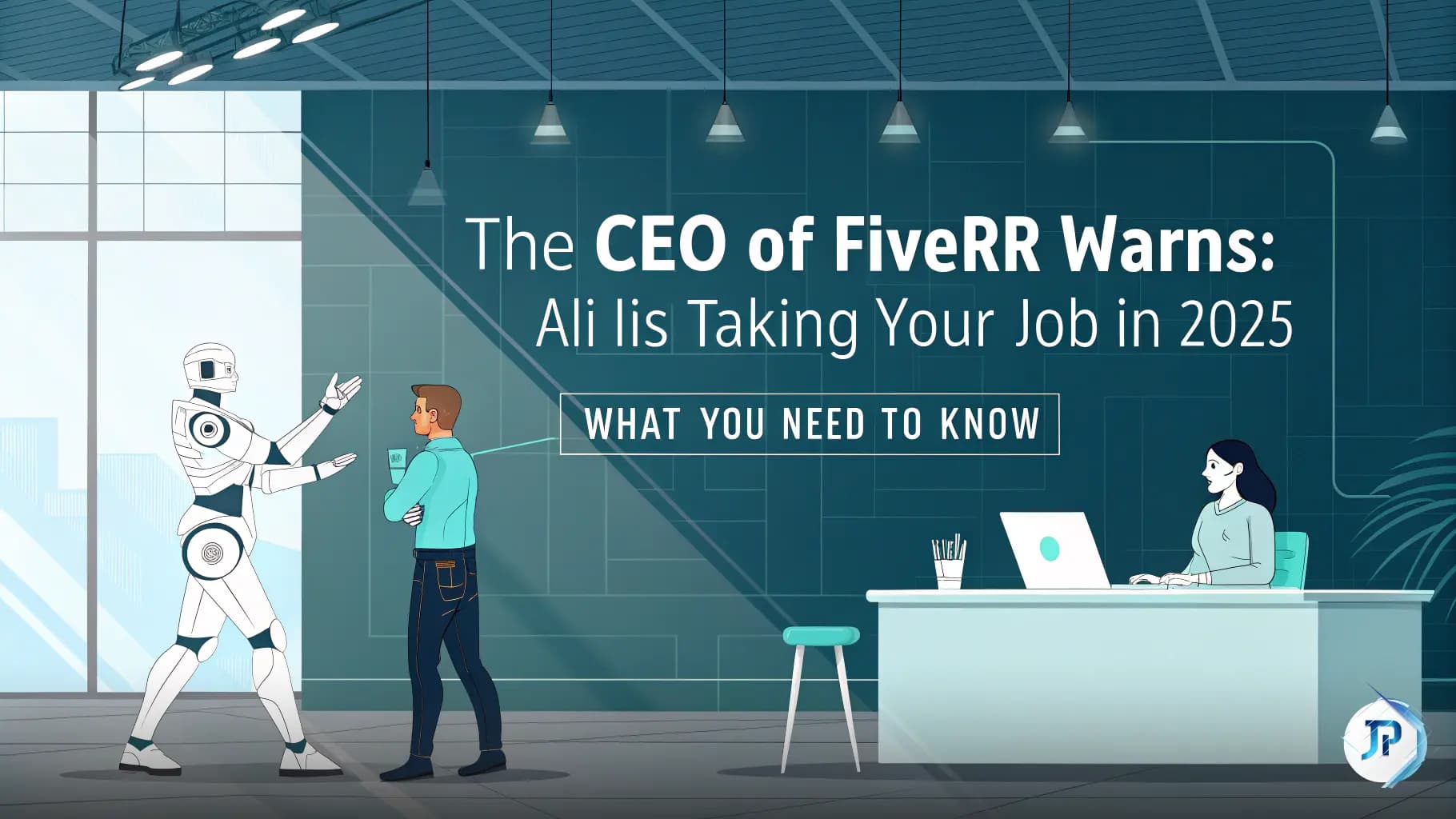
We’ve all heard ominous predictions about technology and automation reshaping our jobs, but a recent statement from Fiverr CEO has reignited this debate. Fiverr, the popular freelance marketplace, has become the talk of the town after its CEO boldly declared that AI is on track to displace many jobs by 2025. And the irony? A platform reliant on human freelancers is issuing this warning.
But how true is this claim? Are you likely to lose your job, or is there a way to thrive alongside AI? This article digs into the CEO’s statement while providing you with actionable tips to secure your place in this evolving landscape.
What Exactly Did Fiverr’s CEO Say About AI Job Displacement?
The controversial statement came during a keynote speech at a tech innovation conference earlier this year. Fiverr’s CEO remarked, “Artificial intelligence will drastically reshape our workforce in 2025, automating many tasks we rely on today.” While this isn’t the first prediction about AI changing the job market, the claim gains attention due to Fiverr’s reliance on human freelancers who might encounter disruption themselves.
Why Now?
The timing aligns with AI tools becoming widely accessible and powerful. The CEO’s statement is both a wake-up call and a strategic move to position Fiverr as a company aligned with the AI future. For years, Fiverr encouraged freelancers to adopt tech, and this statement might signal their pivot towards offering more AI-centric services. But is this a warning or a marketing strategy? Only time will tell.
Which Jobs Are Most Vulnerable to AI Disruption in 2025?
To evaluate the CEO’s claim, let’s identify work domains that are highly susceptible to automation.
Jobs on the Front Line
- Administrative Roles: Tasks such as scheduling, bookkeeping, and data entry are already being replaced by tools like AI assistants and RPA (robotic process automation).
- Creative Industries: AI tools like ChatGPT and MidJourney are transforming content creation, graphic design, and video editing, reducing the need for manual labor at scale.
- Customer Service: Automated chatbots can handle hundreds of customer queries simultaneously, reducing the demand for traditional helpdesk jobs.
Emerging Data
Recent reports predict that by the end of 2025, nearly 40% of current jobs will see significant transformations, with some roles being entirely automated while others are augmented by AI.
Surprising Areas Being Impacted
Even roles like medical diagnostics, legal writing, and software programming aren’t entirely immune. AI tools are learning and mimicking complex processes, shifting how these professions function.
Automation vs. Augmentation
It’s important to note: AI doesn’t always replace jobs; it often complements human abilities. For instance, a graphic designer using an AI tool can boost productivity rather than being out of a job entirely.
The Skills That Will Keep You Employed in the AI Era
While AI is powerful, there are areas where it still can’t match human capabilities. Here’s where to focus as you future-proof your career.
The Human Edge
- Critical Thinking and Problem Solving: AI executes tasks but struggles with nuance, creativity, and strategic thinking.
- Emotional Intelligence and Communication: Building relationships and understanding human emotion remain uniquely human strengths.
- Ethical Decision-Making: In industries like healthcare or law, navigating moral complexities is a uniquely human domain.
Hybrid Skills
Combine technical know-how with soft skills. For example:
- Technical Skills: Data analysis, programming, and AI tool management.
- Soft Skills: Adaptability, creativity, and collaboration.
Emerging Job Roles
Instead of fearing job losses, focus on new opportunities like:
- AI Trainers.
- Human-AI Interaction Designers.
- Responsible AI Ethicists.
Upskilling Suggestions
- Join courses on AI and automation platforms (Coursera, Udemy).
- Learn ethical AI practices.
- Get certifications in hybrid roles like data analytics and business intelligence.
How Workers and Freelancers Are Adapting to the AI Revolution
There’s no blanket response to AI—workers and freelancers adopt unique strategies.
Success Stories
Take, for example, writers learning to leverage GPT tools for enhancing creativity or graphic designers using AI to generate creative templates. The result? Faster outputs without sacrificing quality.
Freelancers vs. AI
Freelancers, in particular, are identifying areas where they collaborate with AI rather than compete against it. Fiverr itself encourages using AI to streamline workflows—for example, automating repetitive proposals or rendering design iterations.
Evolving Freelance Marketplaces
Platforms like Fiverr are pivoting towards hybrid services. Expect Fiverr to launch AI-powered tools that freelancers can use, helping balance human creativity with machine efficiency.
Practical Adaptation Steps
- Embrace an "AI collaborator" mindset.
- Showcase your adaptability in portfolios or LinkedIn by integrating AI-enhanced work.
- Build a personal brand that highlights unique, human strengths AI cannot replicate.
My Analysis: Is the Fiverr CEO Right or Just Creating Hype?
The Claim’s Validity
Fiverr’s CEO isn’t entirely off the mark—AI is reshaping roles at lightning speed.
Where AI Falls Short
However, current AI systems still face limitations in areas requiring emotional depth, ethical decision-making, and nuanced creative thinking.
Economic and Policy Barriers
Economics and societal factors can slow AI adoption:
- Companies face high implementation costs.
- Public pushback may lead to stricter regulations.
My Perspective
AI will impact jobs, but it’s unlikely to lead to mass displacements by 2025. The transition will create just as many opportunities as it eliminates, provided workers evolve and adapt appropriately.
Conclusion
AI is undeniably changing the job market, but it’s not all doom and gloom. By learning how to complement AI—even mastering its capabilities—you can secure your career in this evolving landscape.
Remember: History teaches us that every technological disruption eventually creates more jobs than it destroys. As Fiverr’s CEO highlighted, these changes are inevitable, but so is human adaptability.
Take charge of your career now. Assess your skills, embrace lifelong learning, and begin your journey to upskill today. Need help creating a roadmap? Get in touch!